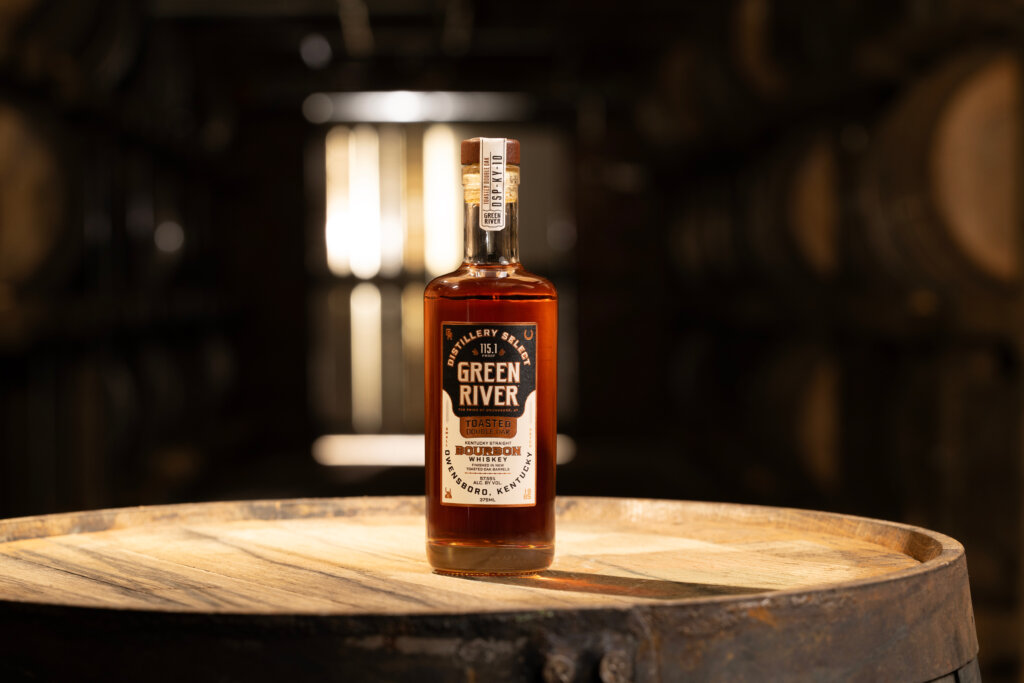
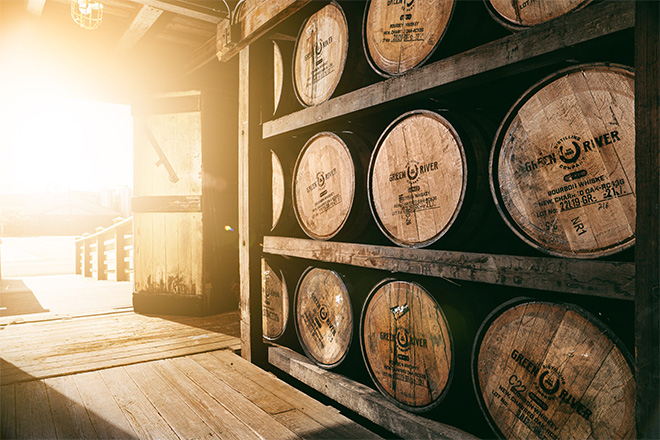
We roll a fresh barrel of bourbon into the warehouse. Years later, we tap it. Some of the whiskey is gone. Nobody drank it. Nobody spilled it. The angels took their share.
That’s angel’s share whiskey in a sentence. So, what is the angel’s share, minus the mysticism? It’s the bourbon that evaporates out of the barrel while it ages. Oak, heat, and physics do the work.
We think every bourbon drinker should know this. It explains why older bottles cost more, why proof moves around, and why two barrels filled on the same day taste different. It also helps you tell the difference between paying for age and paying for hype.
The Angel’s Share, Plainly Put
The angel’s share is the whiskey a barrel loses to evaporation during aging. Water and alcohol vapor seep through the wood and drift into the warehouse air. Nobody gets it back.
Distillers centuries ago had no way to explain the missing whiskey. So they blamed the angels. The name stuck because it sounds better than “evaporation loss,” which sounds like a line on a tax form.
Then there’s the devil’s cut. That’s the whiskey that soaks into the barrel staves and stays there. The angels take what rises. The devil keeps what sinks into the wood. Between them, a barrel gives up plenty of bourbon before anyone pours a glass.
How Bourbon Escapes Through Solid Oak
Bourbon has to age in new charred oak containers. That’s federal law. Oak looks solid. It isn’t airtight. Tiny pores in the staves and barrel heads let air in and vapor out.
Temperature runs the show. When the warehouse heats up, the whiskey expands and pushes into the wood. When it cools, the whiskey contracts and pulls back out, bringing flavor from the char with it. Every cycle moves whiskey. Every cycle lets a little vapor go.
Here’s the part that surprises people. Water and alcohol don’t evaporate at the same rate, and humidity decides which one leaves first.
In hot, dry air, water tends to escape faster. Proof climbs. In cool, damp air, alcohol tends to leave faster. Proof drops. So bourbon aging evaporation doesn’t follow one rule. The barrel loses volume either way. The weather sets the strength.
Doing the Math: How Much Bourbon Goes Missing
How much bourbon evaporates in a barrel? More than most folks guess.
Year one hits hardest. Dry new oak soaks up whiskey fast, and evaporation runs high. Many Kentucky distillers lose close to 10% in the first year, counting what the wood absorbs. After that, losses usually settle around 3% to 5% a year, depending on the barrel and where it sits. This overview of angel’s share rates lays out the general numbers.
A standard bourbon barrel holds 53 gallons. After four years, a noticeable chunk has vanished. Push it to ten or twelve years and a barrel can lose a third of its whiskey or more. Some very old barrels hand back a fraction of what went in.
That’s the honest reason older bourbon costs more. There’s less of it. The distiller paid for grain, labor, warehouse space, and time, and the angels still took their cut.
Our take? Pay for age when you can taste it. Don’t pay for a fancy box, a lottery release, or a scarcity story. A well-made bourbon at a fair price beats a hyped bottle every time. Our bourbon lineup runs on that idea.
Why Kentucky Weather Makes the Angels Extra Thirsty
Kentucky doesn’t do mild. Summers run hot and sticky. Winters bring hard freezes. Spring and fall flip back and forth, sometimes in the same week. Each swing pushes whiskey into the oak and pulls it back out.
That constant movement sits at the center of Kentucky climate and bourbon aging. It speeds up evaporation too. Scotland stays cooler and damper, and Scotch distillers often lose around 2% a year. Kentucky barrels lose more and pick up oak faster. A six-year-old Kentucky bourbon and a six-year-old Scotch aged under very different conditions. The Kentucky Distillers’ Association has more on how the state’s weather shapes its whiskey.
Top Floor, Bottom Floor: Rickhouse Location Matters
A rickhouse is the warehouse where barrels rest on wooden racks, often several floors high. Heat rises, so the top floors run hotter. Barrels up there age faster, lose more whiskey, and often gain proof. Expect bolder oak, darker color, and more spice.
Lower floors stay cooler and steadier. Barrels down there mature slower. The flavor leans softer and more balanced, with less wood.
We see it in our Owensboro warehouses. Two barrels we fill on the same day with the same whiskey taste different a few years later, depending on where they sat. That’s one reason our single-barrel bottlings change from release to release.
Barrel Size and Other Variables
Smaller barrels put more whiskey against more wood. That speeds up flavor pickup and evaporation. It’s why small-barrel whiskey tastes woody fast but rarely tastes old.
Char level matters too. Heavier char exposes more wood surface. Humidity, airflow, and how well the building holds heat all shift the rate. No two warehouses lose whiskey at the same pace. Our guide to aging and mash bills covers more of these variables.
That Black Stuff on Distillery Buildings
Drive past a Kentucky rickhouse and you’ll spot a black crust on walls, roofs, trees, and road signs. That’s whiskey fungus, Baudoinia compniacensis. It feeds on ethanol vapor drifting out of the barrels.
It isn’t soot. It isn’t paint. It’s the clearest sign of the angels at work. The neighbors don’t always love it.
What the Angels Leave Behind in Your Glass
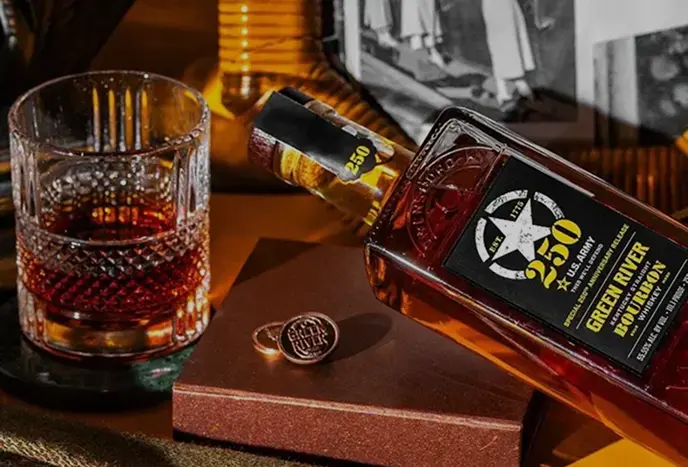
Evaporation takes volume. What stays gets more concentrated. Add years of oak contact and the whiskey picks up caramel, vanilla, toasted oak, and baking spice like cinnamon and clove.
More loss doesn’t automatically mean better bourbon. A barrel that sits too long or too hot turns bitter, tannic, and dry. Age helps until it doesn’t. Distillers taste barrels to find the balance point.
Want to test it? Pour a younger bourbon next to an older one. The younger pour usually shows more grain, brighter fruit, and a lighter body. The older one tends toward deeper caramel, more oak, and a longer, drier finish. Add a few drops of water to each and taste again. Plenty of people prefer the younger pour. That’s fine. Your glass, your call.
FAQs About the Angel’s Share
Why is it called the angel’s share?
Early distillers couldn’t explain the missing whiskey. Folklore said it floated up to heaven for the angels. The name outlasted the mystery.
How much bourbon evaporates in a barrel each year?
In Kentucky, most barrels lose around 3% to 5% a year after a heavier first year. Climate, rickhouse floor, barrel size, char level, and humidity all move that number.
Can distillers stop the angel’s share?
No. Oak has to breathe for bourbon to age. Some distillers control temperature or humidity to slow the loss, but nobody stops it. The loss comes with the flavor.
Does the angel’s share make bourbon stronger or weaker?
Both, depending on conditions. In hot, dry warehouses like many in Kentucky, water leaves faster and proof rises. In cool, damp places like Scotland, alcohol leaves faster and proof falls.
What is the devil’s cut?
It’s whiskey that soaks into the barrel wood instead of evaporating. It stays in the staves after the distiller empties the barrel.
Every bottle of bourbon is what survived the angels. Years of Kentucky heat and cold. A few gallons gone to the air. A few more locked in the oak. Patience, weather, and wood stand behind every pour.
Knowing that helps us respect age without overpaying for it. Age matters. Hype doesn’t.
Taste what the angels left behind. Explore our bourbon, stop by our Louisville tasting room, and pour one with friends. Enjoy it, and enjoy responsibly.